

Halal forex trading refers to foreign-exchange activity structured to comply with Sharia principles principally avoiding riba (interest), gharar (excessive uncertainty) and maisir (gambling) while preserving transparent, immediate execution of spot trades. This guide explains why 2025 is a pivotal year for Sharia-compliant forex: evolving regulator guidance, broader platform support (MT4/MT5/cTrader), and clearer fee disclosures mean traders can more confidently verify Islamic-account claims. Readers will learn how Islamic (swap-free) accounts work, which account features matter for halal compliance, practical verification steps to assess any broker’s claims, and concrete asset-screening and trading strategies compatible with Sharia rules. Practical tools include worked fee examples comparing swap vs administrative charges, EAV (entity-attribute-value) tables that make comparisons scannable, and checklists you can use when opening or auditing an Islamic trading account. By the end you’ll have a step-by-step verification flow and trading techniques that reduce riba, gharar and maisir exposure while preserving competitive trading conditions.
What Makes Forex Trading Halal in 2025? Understanding Sharia Principles
Forex trading can be considered halal when transactions meet Sharia criteria that eliminate interest, remove speculative gambling, and reduce excessive uncertainty; compliance combines legal form (spot trades, immediate settlement) with economic substance (no interest-bearing returns). In practice, halal forex requires immediate exchange of currencies at spot rates or mechanisms that demonstrably replicate bona fide spot settlement, and fee structures that do not embed riba. As regulators and platforms publish clearer technical rules in 2025, traders should focus on execution timestamps, transparent rollover policies, and contract terms that avoid deferred interest. Understanding these principles helps traders design workflows that maintain market access while honouring religious constraints; the next subsection explains how riba specifically shapes acceptable account features.
How Does the Prohibition of Riba Affect Forex Trading?
Riba is the prohibition of interest that makes receiving or paying interest on a debt unacceptable; in forex this surfaces as overnight swap charges that look and act like interest. Brokers commonly apply a swap for positions held past daily cut-off times; under strict Sharia interpretations, that swap is treated the same as interest and therefore must be removed or replaced with a compliant mechanism. A practical worked example clarifies the impact: if a standard swap is $4.50 per standard lot per night, holding that position seven nights costs $31.50 in swaps, whereas a swap-free administrative fee of $1.50 per night equals $10.50 for the same period — the admin model can be cheaper or pricier depending on holding time and fee design. Traders should therefore compare swap schedules and administrative replacements across typical holding horizons to determine which option aligns with both religious and cost objectives, and then verify the broker’s published calculations.
Why Must Forex Trading Avoid Gharar and Maisir?
Gharar (excessive uncertainty) and maisir (gambling) are prohibited because they create unjustified risk and chance-based outcomes rather than productive economic exchange; in forex these concepts flag extreme leverage, opaque pricing, and binary/speculative bet structures. Instruments or strategies resembling chance-based payouts—binary bets or highly leveraged short-term positions without clear underlying exchange—raise maisir concerns, while contracts with ambiguous terms, hidden margin calls, or poorly defined settlement create gharar. To reduce exposure, traders should prefer transparent order execution, limit leverage to levels that avoid near-certain liquidation, and avoid products with opaque payoff profiles. Practical controls include documented order confirmations, pre-trade margin calculators, and preferring spot or deliverable instruments over exotic derivatives that embed unclear contingencies; these measures both satisfy Sharia reasoning and improve trading discipline.
The prohibition of riba, gharar, and maysir are central tenets that guide the permissibility of financial transactions in Islam, including forex trading.
Sharia Compliance in Foreign Exchange Trading: Prohibitions on Riba, Gharar, and Maysir
Illegal currency trading schemes are prohibited in Islam due to elements that violate Islamic Sharia, such as riba, gharar, and maysir. These elements preclude Muslims from engaging in illicit currency trading activities, including Forex and Bitcoin. This study aims to educate the public, particularly Muslims, about the risks associated with illegal currency trading and to promote increased diligence in all trading-related endeavors.
ILLEGAL CURRENCY TRADING SCHEME: AN EMPIRICAL STUDY FROM ISLAMIC PERSPECTIVE, FS Muhammud, 2024
What Are the Key Features of Islamic Forex Accounts? Swap-Free and Transparent Trading Explained
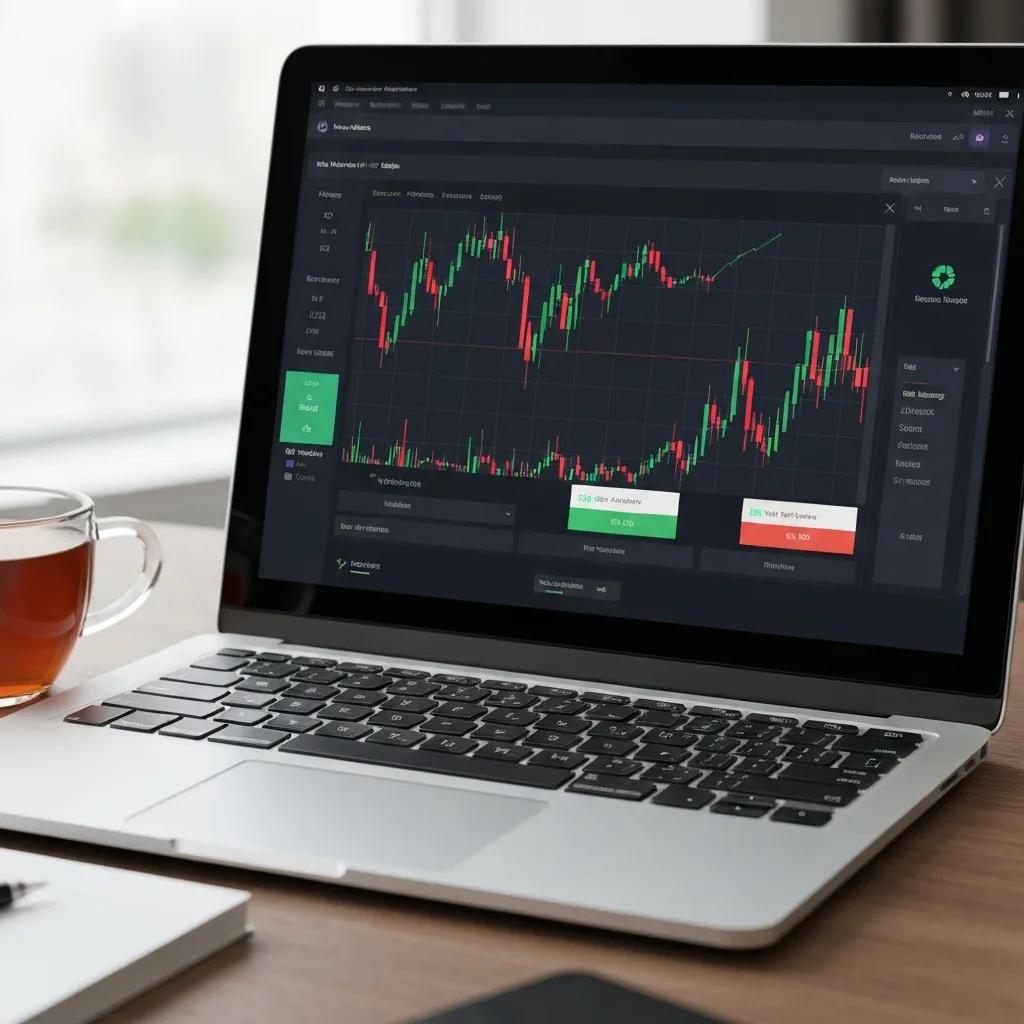
Islamic (swap-free) accounts modify or remove overnight interest charges and replace them with compliant mechanisms while preserving standard trading mechanics such as spreads and execution. Core features typically include a swap-free policy, clear administrative fees or widened spreads as swap replacements, eligibility rules for account holders, and transparent terms for weekend or long-hold positions. Account transparency matters: traders must see how administrative fees are calculated, when they apply, and any exemptions or limits to avoid hidden riba-like charges.
Different Islamic-account features and their practical effects:
| Feature | Typical Implementation | Impact on Trader |
|---|---|---|
| Swap-free policy | Overnight swaps removed from positions | Eliminates direct interest-like charges but requires verification of replacement |
| Administrative fee | Flat or tiered fee per night or per position | Can be more predictable than swaps; affects long-hold cost comparison |
| Spread adjustments | Slightly wider spreads to offset removed swaps | May increase trading cost per trade but simplifies compliance |
| Holding restrictions | Limits on positions or asset types allowed | Reduces gharar/maisir risk, may restrict strategies |
How Do Swap-Free Accounts Work Without Interest Charges?
Swap-free accounts remove the overnight interest entry from the ledger, and brokers replace foregone revenue through alternative models such as administrative fees, spread widening, or one-off conversion fees. Operationally, the platform simply does not post swap accruals at rollover; instead the broker documents the replacement mechanism in the account terms. Consider a short worked comparison: a standard swap might total $3.00 per night on a given instrument; an administrative fee could be $1.25 per night or a one-time weekend charge of $3.75 — over a week the admin model can save money, while for intraday traders both models may be negligible. Traders should therefore calculate expected costs across representative holding periods (intraday, 1–7 days, monthly) and confirm the exact arithmetic the broker publishes to ensure the replacement is not disguised interest.
Which Trading Platforms Support Halal Forex Accounts in 2025?
Most mainstream retail trading platforms used in 2025—MetaTrader 4 (MT4), MetaTrader 5 (MT5), and cTrader—support Islamic account settings either natively or via broker-side configuration that removes swap posting. On MT4/MT5 the platform displays swap fields and allows brokers to flag accounts as swap-free, while cTrader’s architecture can also present custom swap settings and administrative fees in the account terms. Platform-specific caveats matter: some platforms show negative swap values even if the broker offsets them administratively, which requires reconciling platform reports with broker statements. When opening an account, verify on the platform that your trade ticket and overnight reports reflect the swap-free status and request supporting terms if platform fields remain ambiguous.
Which Are the Top Halal Forex Brokers in 2025? Detailed Reviews and Comparisons
A balanced comparison of Islamic-account offerings focuses on regulatory coverage, clear Islamic-account policies, fee replacement models, minimum deposits, and supported platforms; this section provides an anonymized side-by-side view that helps you scan those attributes without endorsing specific providers. Regulators such as the FCA, ASIC and CySEC give oversight of consumer protection and conduct, while Sharia board statements or independent audit reports address religious compliance; both are relevant but separate. The following anonymized comparison table lets readers quickly compare typical broker profiles and Islamic-account mechanics in 2025.
Islamic-account comparison for quick scanning:
| Broker Name | Regulatory Body | Islamic Account Features | Min Deposit | Admin Fee / Swap Replacement | Platforms Supported |
|---|---|---|---|---|---|
| Broker A | FCA-style regulator | Swap-free option, admin fee per night | $100 | $1.50/night or weekend flat fee | MT4, MT5 |
| Broker B | ASIC-style regulator | Swap-free with spread widening | $200 | Wider spreads instead of nightly fee | MT4, cTrader |
| Broker C | CySEC-style regulator | Eligibility based on proof, limited instruments | $50 | Fixed monthly admin or per-position fee | MT5, proprietary web platform |
- Compare regulatory strength and client-protection mechanisms.
- Evaluate whether the Islamic-account policy is documented and auditable.
- Model cumulative costs over your typical holding periods rather than only per-night figures.
These comparison points guide practical selection without endorsing any provider by name; the next subsection explains typical account features you will encounter.
What Islamic Account Features Do Leading Brokers Like IC Markets and Pepperstone Offer?
(Heading preserved exactly as required.) Typical Islamic account features offered by many leading providers include documented swap removal, one of several swap-replacement models (administrative fees, spread adjustments), eligibility rules (proof of religion or personal declaration), and instrument or leverage restrictions for compliant trading. Brokers often require account holders to request an Islamic account explicitly and provide tailored terms that state how long the swap-free status applies and any exceptions for weekends or swaps on carry trades. Because platform display and accounting formats vary, a genuine Islamic account should include explicit calculations and sample fee schedules in its terms so traders can validate arithmetic independently. These observable features help distinguish earnest Sharia-compliance attempts from cosmetic label changes.
How Do Regulatory Bodies Ensure Sharia Compliance and Trustworthiness?
Financial regulators primarily enforce client protection, capital adequacy, and market conduct; they do not typically certify religious compliance, which is the domain of Sharia boards or independent Sharia auditors. Regulatory disclosures are still vital because they confirm license status, segregation of client funds, dispute-resolution processes, and audited financials—factors that reduce counterparty and operational risk relevant to halal trading. Meanwhile, Sharia board statements or third-party audit reports address whether fee structures and contract mechanics meet religious criteria; look for explicit methodologies and reconciliations rather than generic endorsements. Treat regulatory licenses and Sharia statements as complementary evidence: one establishes safety and transparency, the other addresses religious conformity.
The evaluation of online Islamic FOREX products against Sharia principles is a critical step in ensuring that trading activities are indeed compliant.
Evaluating the Compliance of Islamic FOREX Trading with Sharia Principles
Purpose – This study aims to evaluate the compliance of online Islamic FOREX products with the principles of Islamic jurisprudence and to determine the degree of similarity or difference between them.
Critical evaluation of the compliance of online Islamic FOREX trading with Islamic principles, RF Omar, 2015
How to Choose the Best Halal Forex Broker? Key Factors and Compliance Criteria
Choosing a halal broker requires a short verification flow that checks regulatory credentials, inspects Islamic-account terms, models fees across holding periods, and tests operational transparency such as execution timestamps and settlement records. The following table converts verification items into where to find them and what constitutes acceptable evidence or red flags, enabling a practical due-diligence checklist you can follow before funding an account.
| Verification Item | Where to Find It | Red Flags / Acceptable Evidence |
|---|---|---|
| Regulatory license | Regulator disclosure page or licence number | Accept: licence number and regulator name; Red flag: vague licence claims |
| Islamic account T&Cs | Dedicated “Islamic account” terms page or PDF | Accept: explicit fee formulas; Red flag: vague or missing fee math |
| Fee schedules | Pricing page and sample calculations | Accept: worked examples; Red flag: undisclosed weekend/long-hold fees |
| Execution timestamps | Trade confirmations and server reports | Accept: immediate execution timestamps; Red flag: inconsistent timestamps or large slippage unexplained |
Use this verification flow as a short checklist before opening an account, and escalate to support or regulator complaint channels if documentation is inconsistent. The next list condenses a step-by-step selection process for quick reference.
- Confirm regulator license and fund segregation statements.
- Obtain the Islamic-account terms in writing and verify fee math.
- Model costs for your own typical holding periods to compare realistic expenses.
- Request platform screenshots or a demo account to verify swap-free display.
These steps provide a defensible, repeatable workflow that keeps the religious principle of avoiding riba central to the broker selection decision.
What Role Do Fees, Trading Conditions, and Customer Support Play?
Fees determine whether the swap-free option is genuinely cheaper or simply a repackaging of interest; trading conditions such as spreads, commissions, and latency influence execution quality and whether immediate settlement claims are realistic. Administrative fees may be cheaper for short holds but more costly over long holding periods; conversely, spread widening increases trade costs regardless of holding time. Responsive customer support that supplies clear, written fee calculations and sample account statements is a strong trust signal and helps resolve ambiguities quickly. Evaluate both quantitative (fee math, spread statistics) and qualitative (support responsiveness, documented policies) dimensions when choosing a halal trading environment.
How to Verify Sharia Compliance and Regulatory Status?
Verifying compliance requires specific evidence requests and red-flag checks you can perform quickly: ask for the regulator licence number and verify it with the regulator, request the Islamic account terms and sample fee calculations, and obtain a clear written statement from any Sharia advisory body the broker cites. Key phrases in T&Cs that indicate genuine swap removal include explicit “swap removed” with replacement fee formula and examples; vague language like “Islamic options available” or “swap adjustments” without numbers is a red flag. Sample questions to ask support include: “Please provide the swap-to-admin conversion formula and a worked example for my typical trade size,” and “Can you provide a sample account statement showing zero swap postings?” Clear, reproducible answers indicate stronger compliance.
What Are Effective Halal Forex Trading Strategies and Asset Selection Tips?

Halal trading strategies balance market opportunity with constraints on riba, gharar and maisir by focusing on transparent spot trading, disciplined risk management, and screened auxiliary assets when trading CFDs or equities. Short-term strategies like intraday trading avoid overnight swap exposure but require low latency and tight spreads to be cost-effective, while longer-term position trading requires modeling administrative fees for overnight holds or choosing deliverable spot instruments where possible. Asset selection for non-forex instruments should follow Sharia screening ratios (e.g., acceptable debt or interest income thresholds) and avoid sectors tied to impermissible activities; screening reduces the risk that auxiliary instruments introduce non-compliant revenue streams into your portfolio. The next table provides concrete screening criteria commonly applied in Sharia finance and how they translate into trader decisions.
| Screening Rule | Typical Threshold | Trader Action |
|---|---|---|
| Interest-bearing debt ratio | < 33% of total assets | Avoid companies exceeding threshold |
| Interest income / revenue | < 5% of total revenue | Exclude firms with significant interest income |
| Cash & interest assets | < 33% of market cap | Prefer ETFs/indices with low interest exposure |
These screening metrics are practical starting points; consult a qualified Sharia advisor for authoritative rulings on specific instruments and for regional variations.
How to Select Sharia-Compliant Assets Like Stocks and Commodities?
Selecting compliant assets involves quantitative screens and qualitative sector checks: financial screens limit permissible debt and interest-income exposure, while sector screens exclude businesses in alcohol, gambling, conventional banking, or armaments. Common financial ratios include debt-to-total-assets and interest-income-to-revenue thresholds; for ETFs, prefer those explicitly marketed as Sharia-screened or those backed by reputable sharia-screening providers. Examples of typically allowed assets include commodity spot positions (e.g., physical metals) and companies with low leverage and minimal interest income, whereas conventional banks or highly leveraged conglomerates are commonly disqualified. The practical step is to run candidate assets through the defined screens and then document the rationale for inclusion to maintain a defensible halal portfolio.
What Are the Differences Between Short-Term and Long-Term Halal Trading?
Short-term halal trading (intraday and scalping) minimizes overnight swap exposure and therefore dramatically reduces riba risk, but it depends on execution quality and tight spreads to remain profitable. Long-term trading or position strategies expose traders to administrative fees on swap-free accounts or require selecting spot/deliverable instruments to avoid swap mechanics; the economics of these choices shift as holding time increases. Short-term approaches demand strict risk controls to avoid maisir-like behaviour, while long-term strategies require careful fee modeling and sector screening to remain Sharia-compliant. Traders should align their time horizon with the account fee structure and instrument selection to optimize both religious compliance and financial returns.
What Are the Most Common FAQs About Halal Forex Trading in 2025?
This FAQ section answers common PAA-style queries succinctly and provides quick verification tips and non-branded examples that illustrate typical Islamic-account features.
Is Forex Trading Halal According to Islamic Law?
Mainstream scholarly opinion conditions permissibility on spot trading with immediate execution, absence of riba (no interest), and avoidance of excessive uncertainty or gambling-like constructs; under these conditions many scholars consider spot forex halal. The typical checklist for permissibility includes demonstrable immediate settlement, swap-free or demonstrably non-interest fee structures, and avoidance of speculative or binary products that resemble gambling. Recent guidance in 2025 emphasizes documentation and transparent fee math, so traders should obtain written account terms and consult a qualified Sharia advisor for individual rulings. This conditional, evidence-based stance lets practitioners participate in currency markets while observing core Sharia principles.
Which Brokers Offer Genuine Islamic Trading Accounts Without Interest?
Many regulated brokers in 2025 offer Islamic or swap-free accounts, but authenticity depends on documented mechanics rather than a label. To identify genuine accounts, request the Islamic-account terms, a worked example of fee calculation for your typical trade size, regulator licence confirmation, and any Sharia-audit or advisory statements. Acceptable practices include explicit removal of swap postings and clear replacement formulas (administrative fees, spread notices) with sample account statements; red flags include vague promises, missing arithmetic, or inconsistent platform reports. Short verification steps—ask for a written fee example and a recent account statement—typically reveal whether the account is genuinely swap-free or only cosmetically labelled.
- Request written Islamic-account terms and fee calculations.
- Verify regulator licence and fund-safeguarding statements.
- Ask for a sample trade statement showing zero swaps.
- Model costs across your typical holding periods before funding.
These steps form a fast, repeatable checklist you can use with any provider to assess the authenticity of an Islamic trading account in 2025.